Israel and Lebanon agree conditional ceasefire and Hezbollah-free 'pilot zones' after fourth round of US-mediated State Department talks; Hezbollah rejects deal next day
After a fourth round of US-mediated talks at the State Department in Washington, Israel and Lebanon announced on June 3, 2026 an agreement to implement a ceasefire, made public in a joint statement.
At a glance
- Joint statement announced June 3, 2026 after fourth round of US-mediated State Department talks in Washington
- Conditions: 'complete cessation' of Hezbollah fire; 'evacuation of all Hezbollah operatives' from areas south of the Litani River
- 'Pilot zones' where Lebanese Armed Forces take exclusive territorial control; Lebanese PM Nawaf Salam said it 'does not prejudice our right to a full withdrawal'
- US facilitators: State Department Chief of Staff Daniel Holler and US Ambassador to Lebanon Michel Issa; Hezbollah not a party
- Further negotiations set for the week of June 22
VERDICT — CONFIRMED
After a fourth round of US-mediated talks at the State Department in Washington, Israel and Lebanon announced on June 3, 2026 an agreement to implement a ceasefire, made public in a joint statement. The truce is explicitly contingent on a 'complete cessation' of Hezbollah fire and the 'evacuation of all Hezbollah operatives' from areas south of the Litani River.
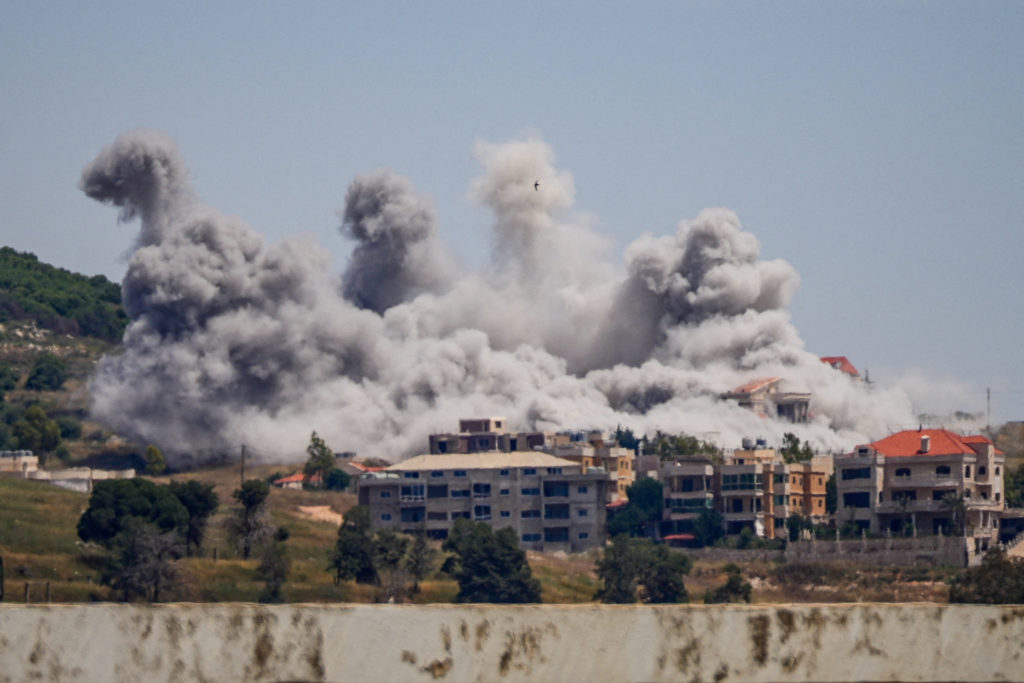
The two governments also agreed to create 'pilot zones' in which the Lebanese Armed Forces 'will take exclusive control of the territory to the exclusion of all non-state actors' — an initial-phase deployment that Lebanese Prime Minister Nawaf Salam said 'does not prejudice our right to a full withdrawal.' The US side was facilitated by State Department Chief of Staff Daniel Holler and US Ambassador to Lebanon Michel Issa; Hezbollah was not a party to the talks. The two sides set further negotiations for the week of June 22 'with a view towards reaching a comprehensive agreement.' On June 4, Hezbollah, via Secretary-General Naim Qassem (Kassem), rejected the deal, calling the Lebanon-Israel negotiations 'absurd, humiliating and insulting,' demanding a comprehensive truce and full Israeli withdrawal, and warning that pulling fighters from the south under fire would mean 'surrender, defeat and achieving the enemy's goals.' Fighting between Israeli forces and the Iran-backed group intensified despite the governmental accord, underscoring the fragility of the mechanism and the gap between the state-to-state deal and the armed actor it targets.
Key facts on file
- Joint statement announced June 3, 2026 after fourth round of US-mediated State Department talks in Washington
- Conditions: 'complete cessation' of Hezbollah fire; 'evacuation of all Hezbollah operatives' from areas south of the Litani River
- 'Pilot zones' where Lebanese Armed Forces take exclusive territorial control; Lebanese PM Nawaf Salam said it 'does not prejudice our right to a full withdrawal'
- US facilitators: State Department Chief of Staff Daniel Holler and US Ambassador to Lebanon Michel Issa; Hezbollah not a party
- Further negotiations set for the week of June 22
- June 4: Hezbollah Secretary-General Naim Qassem rejected the deal, demanding a comprehensive truce and full Israeli withdrawal