Trade Representative Greer's influence grows after Supreme Court rebuke of tariff regime
The Wall Street Journal reported on June 28 that US Trade Representative Jamieson Greer's influence has grown after the Supreme Court rebuked the president's tariff regime.
At a glance
- The Supreme Court ruled most of Trump's earlier tariff levies were illegal, per the WSJ's June 28 report.
- USTR Jamieson Greer is rebuilding the global tariff regime and his influence has grown.
VERDICT — CONFIRMED
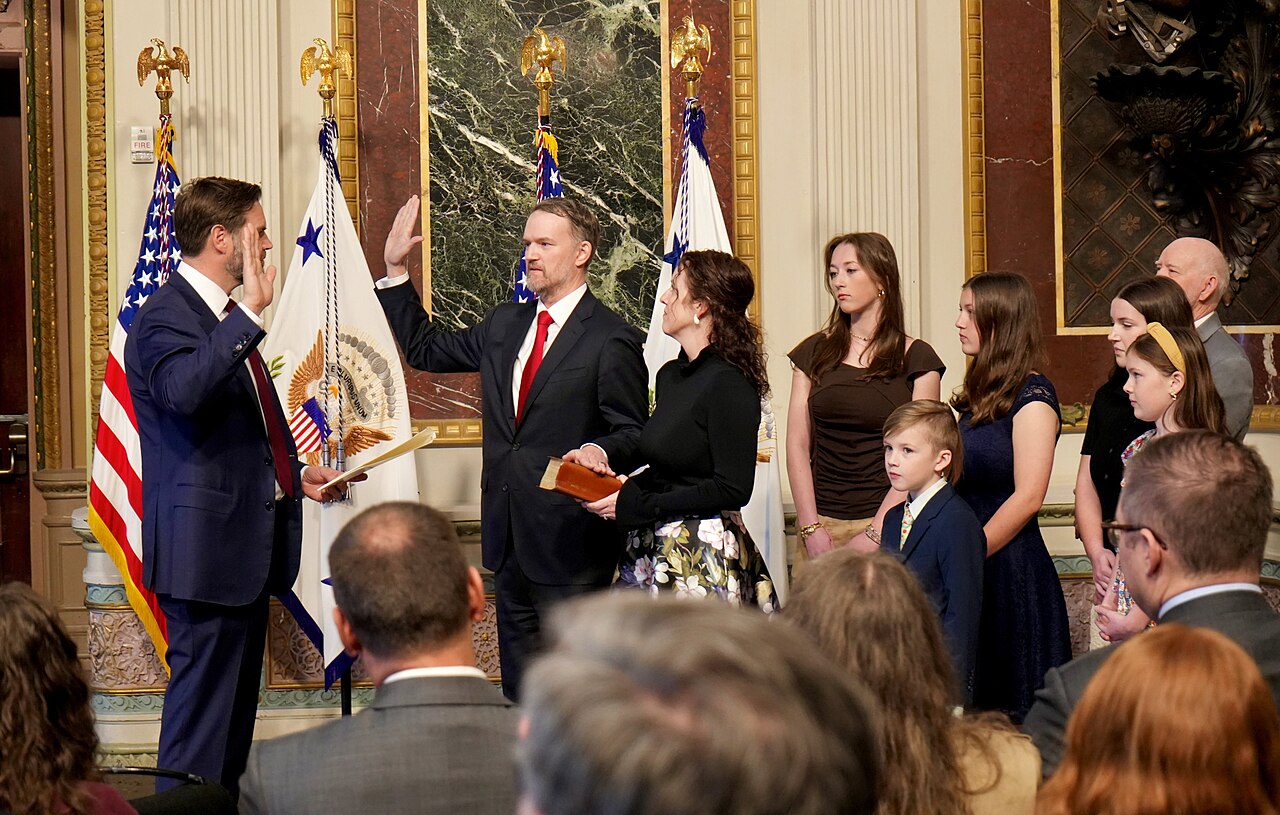
The influence of US Trade Representative Jamieson Greer has grown following the Supreme Court's rebuke of the president's tariff regime, The Wall Street Journal reported on 28 June.
According to the Journal, the court ruled that most of the earlier levies were illegal, and Greer is now rebuilding President Trump's global tariffs — a task the reporting presents as having enlarged the Trade Representative's standing within the administration.
The account is the Journal's own reporting. The precise scope of the court's ruling, the legal basis for the reconstructed tariffs and the shape of the regime Greer is assembling were not detailed in the material available, and the assessment of his rising influence rests on the paper's sourcing rather than any on-record administration statement.
Background
The Office of the US Trade Representative is the cabinet-rank agency that negotiates trade agreements and administers much of the statutory machinery of American trade policy. Greer, a trade lawyer who served as chief of staff to Robert Lighthizer at USTR during President Trump's first term, was confirmed to the top job in 2025 and has been one of the principal architects of the administration's tariff diplomacy.
The sweeping tariffs imposed in 2025 rested heavily on the International Emergency Economic Powers Act, a 1977 statute never previously used to levy import duties, and importers challenged that legal basis in the federal courts almost immediately; the dispute reached the Supreme Court for argument in late 2025. Trade law offers the administration alternative, better-established instruments — including Section 232 national-security tariffs, Section 301 unfair-practices duties and Section 122 balance-of-payments surcharges — but each carries procedural requirements, investigations and limits that the emergency-powers route was used to bypass.
A rebuilding effort run through USTR's statutory authorities would place Greer's office, rather than the White House's emergency powers, at the center of the tariff regime — the structural shift underlying the Journal's assessment of his rising influence.
What comes next
Watch for the administration's formal response to the ruling: which statutory authorities it invokes to reconstruct the tariffs, whether new investigations are opened to support them, and how quickly replacement duties are announced. Any reconstructed regime built on conventional trade statutes would likely face its own legal challenges, per the pattern established by the earlier litigation.
Key facts on file
- The Supreme Court ruled most of Trump's earlier tariff levies were illegal, per the WSJ's June 28 report.
- USTR Jamieson Greer is rebuilding the global tariff regime and his influence has grown.